Contact
Copyright
Translations
|
Inventions and Discoveries
This site is permanently updated.
Last update: 07/03/2007
With this timetable you can travel through time and learn about the phantastic technical adventures and victories of humanity.
The illustrations were all taken in Germany during the famous time of the 'Wirtschaftswunder' after World War II. Come along and peep into the life of a West German family in the fifties and sixties.
Follow the thread of time or just click on a period you are interested in.
v. Chr.
0 - 1700
1700 -
 |
No cross, no crown. |
|
3 000 000
- 2 500 000
|
First manufacturing of stone tools in East Africa
|
|
1 000 000
- 200 000
|
The first use of fire
Hand axes
Wooden lances
Tools made of stone, wood and bones
|
|
200 000
- 10 000
|
Invention of numerous weapons and tools:
scrapers
gravers
knives
hammers
chisels
drills
saws
hatchets
sickles
spear throwers
bow and arrow
|
|
8000
|
Anatolia: first pottery
Jericho: sun-dried bricks
|
|
7000
|
Anatola and Iran: copper mining
|
|
6000
|
Anatolia: loom
Advanced use of the slingshot
|
|
5000
|
Egypt and Mesopotamia:
Advanced irrigation technology: dams and ditches
|
|
4000
|
Seagoing sailing ships
Mesopotamia:
First copper tools, nails, and weapons
|
|
3500
|
fast running potter's wheel
|
|
3200
|
Mesopotamia: scratch plough
Egypt:
scales and discovery of the papyrus
|
|
3000
|
Mesopotamia:
Improved plough with integrated wooden funnel
Disc wheel and cart
Egypt and Mesopotamia:
first writing
early wood lathe with a string traction as drive
Armenia:
iron processing
|
|
around 2800
|
Egypt:
Mirrors of polished copper
The first mastabas (precursors of the pyramids) are built.
|
 |
Ideas and hard work
= Wirtschaftswunder |
|
2697
|
Observation of a solar eclipse in China
|
|
2634
|
Invention of the "magnetic cart" in China
|
|
around 2600
|
The great Egyptian pyramids
|
|
around 2400
|
Indigo used to dye cloth in Egypt
|
|
around 2300
|
Scooping device with leverage effect in Mesopotamia
|
|
around 2000
|
Copper mining in Armenia
The Egyptions brew bear and tan leather.
Silk and crimson are used for clothes.
Spokewheel in Asia Minor and Egypt
|
|
around 1800
|
Introduction of the horse in Egypt
Glass in Egypt
|
|
around 1700
|
First alphabets
|
|
1634
|
Cast glass figurines in Egypt
|
|
around 1600
|
Egypt: use of bellows to fuse metal and glass
|
|
around 1500
|
Blood letting
|
|
around 1400
|
Egypt:
Scrolls made of parchment
Dial balances equipped with yards
|
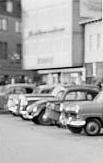 |
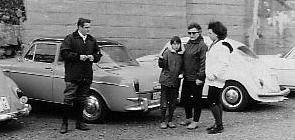
In the beginning of the fifties the possession of a car was to remain a dream for a long time for most West Germans. So it was still easy to find a free parking place even in the city centres. Car owners were extremely priviledged people! |
|
around 1300
|
Thebes:
Lightning conductors at the city gates
Steam baths become popular in Scythia
|
|
around 1250
|
Construction of a channel to connect Lake Timsaeh (the Nile) with the Red Sea
|
|
around 1200
|
China and Egypt:
First umbrellas
Egypt:
Usage of the goniometer and the potter's wheel
China:
Bells cast in bronze
|
|
1184
|
First telegraphy by torches from Troy to Argos
|
|
around 1150
|
China: Building of a zoo
|
|
around 1100
|
In China the obliquity of the eclipse is calculated to be 23° 52'.
|
|
around 1084
|
The art of cutting forms is introduced.
|
|
around 1000
|
East India: Calico prints by means of woodcuts.
|
|
around 800
|
Ships are equipped with anchors.
China: silver coins
|
|
777
|
23rd July: beginning of the first Olympic Games
|
|
around 700
|
The Chinese use iron.
Phoenician sailors reach Gibraltar.
First standard coinage in Lydia
|
|
around 610
|
Phoenician boats sail around Africa.
|
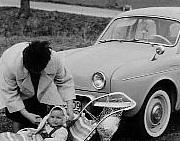 |
The advantages of a car were welcomed by all generations! |
|
around 600
|
Assyria: water clocks
Introduction of the Herodian numbers which remain in use up to 300 BC.
A wheel train transports goods the harbour across the isthmus of Corinth (7.4 km resp. 4.6 mi).
|
|
594
|
Solon:
Introduction of a leap month.
|
|
585
|
28th May: Thales observes an eclipse of the sun. He already knew the attraction caused by magnetic stones and amber rubbed with wool.
First trigonometric calculations.
|
|
around 550
|
Anaximander designs the first maps. He was also the first to use a sundial.
|
|
around 522
|
Eupalinos of Megara: construction of a water pipe of 1.5 km (2.4 miles) length through Mount Castro/Samos.
|
|
500
|
Invention of the spirit level
|
|
400 - 300
|
Cast iron used in China.
|
|
around 350
|
Flexible weapons
|
|
312
|
The Romans start building the Via Appia which connects Rome with Capua. Along this road they erect also their first aqueduct, the Aqua Appia with a length of 16 km (9.9 miles).
|
|
around 300
|
Carthage: First manufacture of a convex glass lense
|
|
300 - 200
|
Use of a foot-driven potter's wheel in hellenistic Egypt.
|
|
around 280
|
The lighthouse of Pharos is built, one of the Seven Wonders.
|
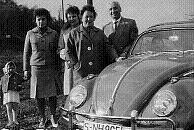 |
This slogan sold millions of beetles in Germany: And it runs and runs and runs and runs ... |
|
275
|
Ctesibios invents a piston pump, a water organ, and a turret operated by compressed air
|
|
263
|
The first sundial in Rome is erected
|
|
around 260
|
Archimedes builds a pulley block and a hydraulic screw.
|
|
around 250
|
Philon of Byzantium performs pneumatic experiments and develops new kinds of missiles and ring shackles.
|
|
around 240
|
Theorem of Pythagoras
|
|
187
|
The Romans start building the Via Aemilia, the road which connects Rimini and Piacenza.
|
|
around 180
|
The Greeks build the pressurized water pipe at Pergamum (estimated pressure: approx. 18 at).
|
|
144
|
Construction of the Roman aqueduct Marcia with a total length of 92 km (approx. 57.2 miles) 10 km (approx. 6.2 miles) of which running on arcades.
|
|
around 100
|
In Greece the screw press is invented.
|
|
around 89
|
Rome: the first hypocaustic systems (underfloor) are constructed.
|
|
100 - 0
|
Syria: invention of glassblowing
|
|
around 0
|
Rome: the first water mills are built.
|
|
0 - 100
|
Roman windows made of glass
Heron invents various pneumatic devices and a steam-powered toy theatre
In Western Europe the saddle comes into use.
Now the Romans also use the crossbow, which has already been developed by the Chinese about 200 years before.
Ts'ai Lun discovers in China how to manufacture paper.
|
|
105
|
Apollodoros of Damascus builds a bridge across the Danube in Dacia.
|
|
around 130
|
In Rome the Pantheon with its large dome (width: 43 m/141 ft) is constructed.
|
|
around 500
|
Athens: overshot water wheel
China: collar harness for horses
|
|
532 - 537
|
Isidore of Miletus and Anthemios of Tralles build the Hagia Sophia in Byzantium. Its dome has a diameter of 31 m (101.68 ft).
|
|
600 - 700
|
The Chinese produce the first porcelain.
The earliest windmills are constructed in Persia.
|
|
673
|
Callincus of Heliopolis (Egypt) ignites a Greek fire.
|
|
700 - 800
|
The Arabs also start using paper.
In China a flexible aft helm is developed.
|
|
around 800
|
The horse collar is also used in Europe.
|
|
800 - 900
|
European saddles are equipped with stirrups.
Ships now sail with improved rigs.
|
|
819
|
The Chinese government issues the first paper money.
|
|
around 950
|
Block printing in China.
|
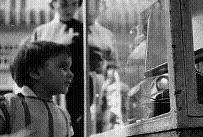 |
It's fun to look even if your purse is empty! |
|
945
|
Gerbert d'Aurillac introduces the abacus.
|
|
1040
|
First fulling mill in France.
|
|
1045
|
China:
The smith Pi Sheng prints with movable types made of clay.
|
|
around 1000
|
The helm is now mounted aft.
|
|
1144
|
Papermill in Xatira near Valencia (Spain)
|
|
1146
|
In Regensburg they construct a stone bridge over the Danube.
|
|
1167
|
Oxford University is founded
|
|
1180
|
European ships are now equipped with a turnable aft helm.
|
|
1195
|
European sailors start using a compass.
|
|
around 1270
|
Italiy:
first reading glasses with cut lenses
|
|
around 1280
|
The first Western spinning wheel is mentioned in the statutes of a Geman guild.
|
|
1284
|
Exeter (Devon, England):
The first clock is mounted on a cathedral tower.
|
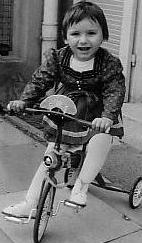 |
German transportation technology for beginners: When you want to get on fast, anything on wheels is better than walking! |
|
around 1290
|
South Americans build cable bridges in the Andes.
|
|
around 1300
|
Rocca, Syria: Discovery of alum
|
|
1308
|
Occcupation of Gibraltar: the first European cannons are fired
|
|
1309
|
Milan, Basilica San Eustorgio:
the first clock tower with a striking mechanism is put into operation.
|
|
1389
|
Nuremberg:
the first German paper mill is established.
|
|
1398
|
The Elbe-Trave-Canal is finished.
|
|
1436
|
Florence:
the dome with span of 42 m (137.76 ft) is built according to the plans of Filippo Brunelleschi.
|
|
1445
|
Johannes Gutenberg invents printing with movable types of metal.
|
|
1450
|
Nicholas of Cusa manufactures eyeglasses for the nearsighted.
|
|
1480
|
First spinning wheel with a flywheel to wind the yarn
|
|
1481
|
The first European lock on a canal is constructed.
|
|
around 1500
|
Leonardo da Vinci:
many technical concepts like a helicopter, a diving bell, a parachute
|
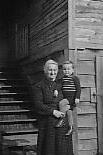 |
That was where the Wirtschaftswunder started from: after the war especially the many millions of victims of the Eastern expulsion lived in modest huts, glad to have at least survived. |
|
1505
|
A new footdriven lathe is equipped with a flywheel and a crank.
|
|
1510
|
Nuremberg: Peter Henlein invents the pocket watch the so-calledNuremberg egg.
|
|
1524
|
Spinning wheel with a pedal crank drive
|
|
1550
|
Tobacco cultivation in Spain
|
|
1557
|
Julius Caesar Scaliger mentions platinum for the first time known.
|
|
1566
|
C. Torelli:
Invention of a seed drill
|
|
1568
|
J. Besson invents a thread cutting machine.
|
|
1573
|
Humphry Cole develops the ship's log to keep track of the speed of a ship with reference to the water.
|
|
1589
|
Cambridge: William Lee constructs an automatic knitting-frame.
|
|
1590
|
I. and Z. Janszen develop a microscope.
|
|
1592
|
Galilei uses a gas thermometer.
|
|
1608
|
The Dutch spectacle-maker Hans Lippershey builds a telescope.
|
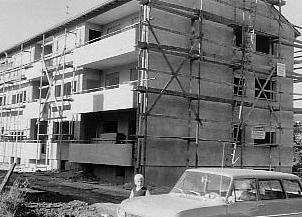 |
After only two decades many people could move from their 'Behelfsheim' into a new apartment or a little house of their own. |
|
1609
|
C. van Drebbel:
discovery of the thermostatic principle
|
|
1619
|
D. Dudley:
use of pit coal for the smelting of iron ore
|
|
1620
|
C. van Drebbel constructs a navigable submarine that he tests in 5 m (16.4 ft) below the surface of the Thames.
|
|
1623
|
W. Schickard develops the first calculating machine
|
|
1629
|
G. Branca:
Description of a steam turbine
|
|
1635
|
J. Locatelli constructs a sawing machine
|
|
1637
|
Building of the three-decker Sovereign of the Seas
Equipped with 104 cannons, she is 38.7 m (126.9 ft) long and 14.2 m (46.6 ft) wide and is considered to be the world's largest ship at that time
|
|
1639
|
Galilei conceptualizes a clock with pendulum
|
|
1642
|
Blaise Pascal invents a calculating machine which is able to add and subtract.
|
|
1643
|
E. Torricelli develops a thermometer with mercury as fluid
|
|
1650
|
Otto von Guericke invents the piston air pump
|
|
1654
|
The famous experiment with the Magdeburg hemispheres is shown at the Regensburger Reichstag. Von Guericke demonstrates that even two teams of horses were not able to overcome a force holding spheres together if this force is created by a vacuum.
|
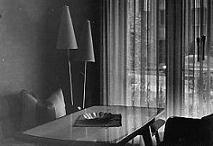 |
Typical Wirtschaftswunder living room. Don't miss the special design of the lamp! |
|
1658
|
Robert Hooke:
Watch with a regulated balance-spring
|
|
1662
|
In Paris the first regularly plying horse bus line is established.
|
|
1663
|
E. Somerset, Marquis of Worcester, gets a patent for a steam-powered pump. But it is not known whether it has ever been put into practice.
|
|
1664
|
D. Papin:
invention of a steam digester.
|
|
1665
|
England:
Writing with a graphit pen
|
|
1668
|
London streets are lit by petrol lamps.
|
|
1671
|
Leibniz invents a calculating machine which can multiply and divide.
|
|
1677
|
J. von Kunckel discovers an aqueous solution of ammonia.
|
|
1681
|
France:
- The Canal du Midi is finished.
- The water supply and pumping station of Marly is built.
|
|
1687
|
G. Amontons develops the hygrometer.
|
|
1690
|
Papin builds an atmospheric steam engine.
|
|
1698
|
T. Savery constructs the Miner's Friend, a steam pump to remove water from a colliery.
|
|
1701
|
J. Hanbury rolls thin sheets.
|
|
1704
|
N. F. Duiller improves the clock by using rubies as bearing stones.
|
|
1708
|
E. W. von Tschirnhaus and J. F. Boettger manufacture the first European china (porcelain).
|
|
1711
|
J. C. Le Blond applies three-colour printing.
Th. Newcomen builds a serviceable atmospheric steam engine.
|
|
1716
|
J. N. de la Hire invents a two-way water pump.
|
|
1718
|
D. G. Fahrenheit uses mercury in a thermometer.
|
|
1720
|
G. Graham improves the clock by adding the cylinder escapement
|
|
1721
|
J. Palfijn applies forceps.
|
|
1726
|
J. Harrison constructs a clock with a gridiron pendulum.
|
|
1730
|
R&eaumur improves the thermometer. He uses alcohol instead of mercury.
|
|
1731
|
J. Headly builds a reflecting sextant.
|
|
1733
|
John and Paul Wyatt invent a spinning machine which drew the fibres through roller sets which turned at varying speeds.
|
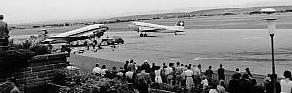 |
Taking off in the Wirtschaftswunder. |
|
1742
|
B. Huntsman succeeds in melting cast iron.
|
|
1745
|
J. de Vaucanson constructs an automatic weaving loom for the manufacture of silk designs.
P. vom Musschenbroek and E. G. von Kleist both discover independantly from each other the principle of the Leiden jar.
|
|
1746
|
J. Roebuck develops the lead-chamber process for the production of sulfuric acid
J. Montgolfier discovers the principle of the hydraulic ram
|
|
1750
|
J. A. von Segner builds a water wheel working on a repulsion principle
Durham, England: The first coal injection furnace is installed (height: 12 m/39 ft).
|
|
1751
|
B. Huntsman develops the crucible process for casting steel
|
|
1752
|
Benjamin Franklin invents the lightning conductor
|
|
1755
|
The first sewing machine is developed by C. F. Weißenthal.
|
|
1756
|
Glass cylinders are used for petrol lamps.
|
|
1758
|
Jedediah Strutt introduces the ribbing machine for the production of stockings.
|
|
1759
|
J. Harrison develops the marine chronometer 'Number Four'
|
|
1760
|
J. Merlin mounts the first roller skates.
First automatic watches
|
|
1763
|
J. Wedgewood gets a patent for his earthware.
|
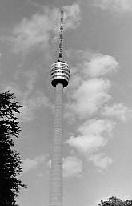 |
Up or far:
in the Wirtschaftswunder time
no point seemed impossible to reach. |
 |
|
1764
|
J. Hargreaves 'Spinning Jenny' can spin eight threads at once. Jenny was his daughter's name.
|
|
1765
|
James Watt low pressure steam engine is six times as effective as the Newcomen engine.
|
|
1767
|
J. Kay builds the 'Waterframe', a spinning machine driven by water power
|
|
1768
|
English machine manufacturers now use exclusively cast iron.
|
|
1769
|
J. Cugnot's steam carriage can travel at 3,6 km/h/2.25 mi.
R. Arkwright develops the 'Spinning Throstle', a waterframe spinning machine
|
|
1771
|
J. Wilkinson constructs a cupola blast furnace
|
|
1774
|
J. Wilkinson gets a patent for his cylinder boring machine (application: manufacturing cylinders for steam engines).
|
|
1777
|
D. Bushnell develops a torpedo
|
|
1779
|
S. Crompton's 'Mule', a cross between a spinning jenny and a water-frame spinning machine
|
|
1782
|
James Watt develops a double-acting steam engine, thus improving his former construction.
The first successful experiment with a hot-air balloon is publicly performed by Joseph and Etienne Montgolfier.
Jacques Charles experiments with a hydrogen balloon but succeeds only ten days later to travel in it with his team and has to leave fame to the brothers Montgolfier.
|
|
1783
|
Thomas Bell invents cylinder printing for fabrics.
Henry Cavendish finds out that the combustion of Hydrogen produces water.
Scheele finds glycerine.
|
|
1784
|
Joseph Brahmah develops an improved type of lock.
|
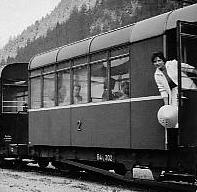 |
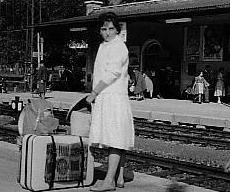
Travel broadens the mind. |
|
1786
|
In England and Germany engineers experiment with gas lighting.
|
|
1787
|
Friedrich Krupp starts a steel plant in Essen, Germany.
|
|
1789
|
Sir William Fairbairn manufactures steam boilers with the help of a riveting machine.
|
|
1790
|
The dental drill is first applied by John Greenwood, the dentist of George Washington.
|
|
1795
|
Francois Appert, France, develops a sterilization process for food by bottling or canning, heating, and sealing.
|
|
1796
|
Edward Jenner introduces the vaccination against smallpox.
|
|
1798
|
Aloys Senefelder introduces lithography.
|
|
1804
|
Nicolas Appert manufactures the first bouillon cube.
Richard Trevithick's steam locomotive runs on iron rails.
George Cayley invents the first instrument to measure air resistance.
|
|
1825
|
The first railway travels from Stockton to Darlington in England. The carriages are pulled by Stephenson's Locomotion No.1.
W. Sturgeon produces the first electromagnet.
J. G. Appolt constructs a chamber gas-producing retort to be used at the production of glass.
|
|
1826
|
J. Ressel develops the ship's propeller.
|
 |
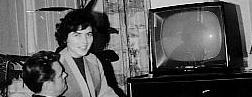
'68: Desires are no longer nourished by delays and the wonder loses part of its magic. |
|
1827
|
O. Pecqueur constructs a differential gear.
|
|
1829
|
J. Thorp introduces a new type of spinning machine and J. Heilman a knitting machine.
J. Ressel gets his ball bearing patented.
|
|
1830
|
C. Sauria and J. F. Kamerer apply phosphorus, sulfur and potassium chlorate on a match which ignites when it is struck.
Now you can use a train to travel from Manchester to Liverpool.
Use of the first road roller
B. Thimounier builds a sewing machine.
|
|
1831
|
McCormick's reaper makes the farmer's life easier.
A steam omnibus line is opened in England
|
|
1832
|
J. Heathcoat develops the steam plough.
Hippolyte Pixii introduces a manually operated 'magneto-electric machine'.
The optical telegraph connection between Berlin and Koblenz (approx. 750 km/466 mi with 61 stations) is initiated.
P. Schilling von Canstadt invents the needle telegraph.
Charles Babbage has the idea of a mechanical calculating machine but does not succeed to make it actually work.
|
|
1834
|
J. Albert invents the steel cable.
M. H. von Jacobi builds an electric motor which is driven by a battery.
S. Colt patents his revolver.
T. Henry discovers the function of the electric relay.
|
|
1835
|
Charles Darwin travels to Galapagos and observes the Darwin finches.
|
|
1836
|
Construction of a steam hammer
John Frederic Daniell finds the Daniell cell, the first reliable source of electric current.
|
|
1837
|
S. F. B. Morse gets his telegraph patented, which sends letters in his famous code.
|
|
1838
|
Michael Faraday discovers the phosphorescent glow.
|
|
1839
|
L.-J.-M. Daguerre introduces his method of photography called daguerreotype.
Charles Goodyear invents the process of the vulcanization of rubber
W. R. Grove builds the first fuel cell, an apparatus producing electrical energy.
|
|
1840
|
Christian Schoenbein (Wuerttemberg, Germany) discovers ozone.
Alexandre-Edmond Becquerel demonstrates the effect of light which can cause chemical reactions producing an electric current.
|
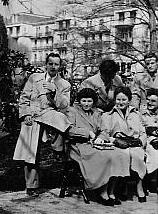 |
1954: After a storm comes a calm. The wounds of war are healing slowly and the Wirtschaftswunder begins. |
|
1841
|
J. Withworth develops the standard screw thread.
|
|
1843
|
Oliver Wendell tells doctors to wash their hands in order to avoid spreading childbed fever (puerperal).
|
|
1844
|
A. Bain introduces the punched tape in telegraphy.
To R. W. Thomson is patent issued for his tyre with a leather casing filled with air. He equips horse coaches with it.
|
|
1845
|
J. Fitch constructs a turret lathe.
E. Howe gets a patent issued for his lock-stitch sewing machine.
|
|
1846
|
R. M. Hoe builds a rotary and web printing press which is used to print the 'Times' since 1848 (wird die 'Times' auf einer solchen Maschine gedruckt (8 000 sheets per hour).
Carl Zeiss establishes a workshop for optical devices in Jena.
W. G. Armstrong develops a hydraulically operated crane.
|
|
1847
|
The 'Telegrafenbaufirma Siemens & Halske' starts production.
Maria Mitchell is the first woman to discover a comet.
John Herschel is the first who measures the brightness of stars with true precision.
|
|
1848
|
R. C. Böttger invents the safety match.
J. Foucault develops the electric arclamp.
Louis Pasteur founds the field of stereochemistry.
Rudolf Albert von Koelliker achieves to isolate cells of smooth muscle tissue.
|
|
1849
|
W. Hunt invents the safety pin.
R. W. Thompson patents his fountain pen.
|
|
1850
|
I. Porro invents prismatic binoculars.
F. Galton develops a teletype printer.
|
|
1851
|
W. S. V. Bauer builds a submarine.
I. M. Singer invents a continuous-stitch sewing machine.
William Armstrong's hydraulic accumulator makes hydraulic machines independent of water sources.
|
|
1852
|
Elisha Otis develops the first passenger lift with a safety guard that holds the elevator even when the cable is totally cut.
Henri Giffard invents and tests the first steam-powered dirigible.
James Prescott Joule and William Thomson (later Lord Kelvin) discover the Joule-Thomson effect (expanding gas cools down).
|
|
1853
|
P. M. Fischer invents the pedal crank for bicycles.
Inspired by Chinese toy helicopters, George Cayley builds a model helicopter actually leave the ground by 27 m/90 ft.
|
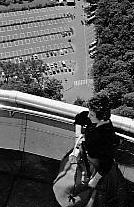 |
Hitch your wagon to a star: the world's first TV tower is erected in Stuttgart. |
|
1854
|
Streets are covered with asphalt.
George Boole develops the first form of symbolic logic, the Boolean algebra
|
|
1855
|
Henry Bessemer a process to manufacture steal at low cost.
Robert Bunsen builds an absorptiometer and applies the gas burner named for him.
|
|
1856
|
Wilhelm Siemens constructs a regenerative furnace.
|
|
1857
|
G. Someiller develops a drill operated by compressed air.
Hermann Ludwig Helmholtz introduces the resonance theory of hearing.
|
|
1858
|
In England the first lighthouse is equipped with electric arclamps.
|
|
1859
|
G. L. Drake drills the first oil well in the U.S.A.
Gaston Plante develops the storage battery.
L. Lemoine invents the steamroller.
|
|
1860
|
J. J. Reis builds a telephone.
Jean-Joseph-Etienne Lenoir develops the first 'horseless carriage' with an internal combustion engine.
F. Walton invents linoleum.
|
|
1861
|
N. A. Otto constructs a four-stroke-engine which is named for him.
Maxwell produces the first colour photograph.
|
|
1862
|
The first rack-railway by N. Riggenbach is taken into operation in Switzerland
A. Parkes produces the first plastic (Parkesin) later known as celluloid.
R. J. Gatling invents the machine gun
|
|
1863
|
W. Bullock invents the rotary printing process.
The first London Underground transports passengers.
L. Pasteur develops the conservation process known as pasteurization.
|
|
1864
|
The Siemens-Martin process for the production of steel is successfully applied.
F. Charlier and A. Vigon invent the CO2 fire extinguisher.
F. C. Donders finds the cause of astigmatism.
|
|
1865
|
Charles Proteus discovers the theory of AC current on which all modern electrical developments are based.
The 'Badischen Anilin- und Sodafabrik' (BASF) are established.
|
 |
Don't bite off more than you can chew! |
|
1866
|
W. Siemens constructs a dynamo.
R. Whitehead invents the torpedo
Cyrus W. Field lays a telegraph cable across the Atlantic Ocean from Ireland to Newfoundland.
|
|
1867
|
J. Monier develops ferroconcrete.
George Westinghouse invents the air brake.
Alfred Nobel introduces the dynamite.
Karl Marx publishes 'Das Kapital' (The Capital).
|
|
1868
|
Georges Leclanche introduces the zinc-carbon battery.
|
|
1869
|
J. W. Hyatt successfully produces celluloid.
Paul Langerhans finds the islets of Langerhans during a dissection of the pancreas.
John Tyndall finds the effect named after him.
|
|
1870
|
W. W. Lymans patents his tin opener.
|
|
1871
|
Max Bodenstein finds the concept of chain reactions.
|
|
1872
|
Henry Draper takes the first photograph of the spectrum of a star (the Vega).
|
|
1873
|
Schliemann claims to have found Troy.
J. C. Maxwell publishes 'Electricity and magnetism' on the basic laws of electromagnetism.
|
|
1874
|
A. Mitscherlich develops a method to produce cellulose from wood.
|
|
1875
|
Sidney Thomas develops a technique to remove phosphorus from iron.
|
|
1876
|
A. G. Bell invents the first fully working telephone.
P. Jablotschkow constructs the 'electric candle'.
Robert Koch grows microorganisms responsible for cattle anthrax in culture.
C. von Linde produces the first practical refrigerator with liquid ammonia as coolant.
Wilhelm F. Kühne finds the enzyme trypsin in pancreatic juice.
|
|
1877
|
T. A. Eddison invents the phonograph carbon microphone.
Otto Lilienthal builds his first glider with arched wings.
Cailletet manages to liquefy oxygen.
First contact lenses made of glass
|
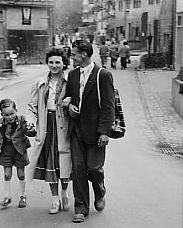 |
The beginning of the fifties: Hunger was still the best sauce but times change and we with time. |
|
1878
|
Heinrich Schliemann reports to have found Agamemnon's tomb in Mycenae (Greece)
In New Haven (USA, Conn.) a commercial telephone exchange is established.
|
|
1879
|
W. Siemens constructs an electric locomotive (3 HP) and shows it at the Berlin Trade Fair.
T. A. Edison and J. Swan both invent the carbon-thread electric lamp each without knowing the other's work
J. R. Ritty introduces his cash register.
|
|
1880
|
H. Hollerith constructs a calculating machine that works with punched cards.
W. Siemens develops an electrically operated lift.
The first electric generation station is built according to plans by T. A. Edison.
|
|
1881
|
Berlin-Lichterfelde: the first electric streetcar transports passengers.
Theodore von Karman develops the science of aerodynamics.
J. Dewar invents the thermosbottle.
F. E. Ives takes the first colour photographs.
|
|
1882
|
In New York the Pearl Street power station starts operation (plans: Edison)
Robert Koch finds the bacterium responsible for tubercolosis which proves the idea that germs can cause human diseases.
First hydro-electric power plant in Appleton (Wisconsin)
H. Maxim invents the machine gun
H. W. Weely patents his electric flat-iron.
|
|
1883
|
G. Daimler and W. Maybach invent the first high-speed internal combustion engine. They apply it on the first true motorboat.
Robert Koch discovers the cholera bacterium and demonstrates that this disease is often transmitted by drinking infectuous water.
First controllable dirigible by A. and C. Tissandier
|
|
1884
|
St. H. de Chardonnet produces rayon of nitrocellulosis.
J. B. Dunlop develops the pneumatic tyre.
Friedrich Loeffler finds the bacillus responsible for diphtheria.
|
|
|
|
|
1885
|
D. Felt invents the 'Comptometer', the first key-driven calculating machine.
Carl Benz baut constructs a three-wheel automobile.
G. Daimler invents the motorbike
C. Auer von Welsbach invents the gas mantle.
C. S. Tainter builds a dictaphone.
T. W. Nordenfelt constructs a submarine.
P. A. Regnault invents the press button.
|
|
1886
|
G. Daimler invents the motorboat.
N. Benardos applies the technology of electric welding.
J. Cochrane develops the dishwasher.
|
|
1887
|
E. Berliner produces the first disc for recording sound.
O. Anschuetz introduces his 'Quickviewer' (precursor of the cinematograph).
H. W. Goodwin presents the first celluloid photographic film.
Gottlieb Daimler builds the first four-wheeled automobile.
|
|
1888
|
J. B. Dunlops pneumatic tyre is equipped with a valve.
G. Eastman develops the first commercial roll-film camera.
Heinrich Hertz discovers radio waves.
O. Schallenbergers constructs an electric meter for alternating current.
N. Tesla and G. Ferraris build an alternating current induction motor.
|
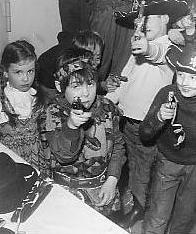 |
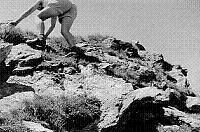
Pioneers in the Wild West must be ready to overcome all obstacles. |
|
1889
|
A. Strowger adds a dial to the telephone.
The Eiffelturm is built according to the plans of Gustave Eiffel.
In San Francisco people listen to the first juke box
T. A. Edisons cinematograph makes the cinema possible.
Edison also helped U.S. prisons to apply alternating current for the electric chair. William Kemmer is the first to be executed this way.
|
|
1890
|
A. Michelin pneumatic bicycle tyres are exchangeable.
Lilienthal flies with the help of a glider.
Clement Adler builds the 'Eole', to first aircraft to leave the ground under its own power.
|
|
1891
|
N. Tesla develops the Tesla coil. It can produce high voltage at high frequency.
Messrs Morris and Salomon (U.S.A.) manufacture an electric automobile.
Edison invents the film camera.
|
|
1892
|
R. Diesel invents the motor named after him.
It is now possible to produce artificial caoutchouc from isoprene.
|
|
1893
|
J. Elster and H. Geitel develop the selenium cell.
W. Judson invents the zipper.
Wilhelm Maybach constucts a carburettor.
G. Knorr discovers a new technology for brakes: the pneumatic brake (Knorr brake)
|
|
1894
|
Marconi invents his radio equipment, which can make a bell ring that is 10 m (30 ft) away.
|
|
1895
|
The liquefaction of air is successfully performed according to the reverse flow principle by C. von Linde.
American trains are pulled by electric locomotives.
Lilienthal and his brother manage to build and fly a glider which can soar above ground higher than its height of takeoff.
A. S. Popow experiments in wireless telegraphie lead him to the invention of the antenna.
W. Fein invents an electric power drill.
W. C. Roentgen discovers and applies X-rays.
Automobiles are equipped with pneumatic tyres.
|
|
1896
|
An electric head lamp makes the miners' life easier.
H. Holleriths Tabulating Machine Company starts production and becomes famous under the name of International Business Machines Corporation IBM.
In France selective weed killers are applied.
S. P. Langley constructs a steam-driven aircraft which actually flies 1,2 km (0.75 mi) before it crashes.
A. S. Popow transmits the first radio message.
|
|
1897
|
K. F. Braun constructs the first cathode ray tube.
In Dresden X-rays are now used in hospitals.
|
|
1898
|
Marie Curie and her husband discover polonium and radium. They also find the principle Marie later names 'radioactivity'.
C. Auer von Welsbach invents the incandescant lamp with a luminous filament of osmium.
In England the first icebreaker is launched and sold to Russia.
A. Santos-Daroundont experiments with an airship.
|
|
1899
|
M. J. Owens constructs an automatic machine to blow glass bottles.
F. A. Kjellin builds an induction furnace.
|
|
1900
|
First takeoff of a zeppelin.
In Germany the first payphones are installed.
Karl Landsteiner discovers that there are at least three different blood types (A, B, and 0).
|
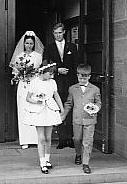 |
1967: Weddings became more glamourous. |
|
1901
|
M. R. Hutchinson designs the first hearing aid.
H. C. Booth invents the vacuum cleaner.
K. Gillette patents the safety razor.
Marconi receives the first transatlantic radio message.
|
|
1902
|
F. Lanchester develops the disc brake.
G. Gauthier builds the first motor scooter.
W. H. Carrier invents air condition.
|
|
1903
|
In Wuppertal, Germany an electrically driven suspension railway is taken into operation.
W. and C. Graaff design a fire extinguisher.
The brothers O. and W. Wright successfully undertake the first motor flight.
E. Benedictus invents safety glass.
|
|
1904
|
C. Huelsmeyer discovers radar.
J. A. Fleming constructs the first vacuum tube.
A. Korn successfully telegraphs photographs from Munich to Nuremberg.
J. W. Rubel improves offset printing.
|
|
1905
|
Guglielmo Marconi designs the directional radio antenna.
Launching of the first German submarine.
The first airplane manufacturing plant is started in France by G. Voisin, E. Archdeacon, and L. Bleriot.
J. E. Brandenburger invents 'Cellophane'.
|
|
1906
|
Thomas Alva Edison designs the 'cameraphone'.
The tungsten-filament light bulb is launched.
A. d'Arsonval and F. Bordas invent freeze-drying.
|
|
1907
|
L. Cornu takes off in a helicopter (1,5 m/4.92 ft).
L. Lumiere invents color photography.
|
|
1908
|
H. Anschuetz-Kaempfe designs the gyroscopic compass.
The Holt Company (California) builds the first tractor.
|
|
1909
|
Henry Ford's 'Model T', also called 'Tin Lizzy' is the first automobile a greater number of people can afford to buy.
L. Bleriot flies across the English Channel.
General Electric introduces the first electric toaster.
E. Forlanini builds the first hydrofoil ship.
|
|
1910
|
G. Claude invents neon light.
H. Fabre builds a hydroplane.
E. Ruhmer shows a TV-set at the World's Fair in Brussels.
|
|
1911
|
The German scientist P. Monnartz discovers stainless steel.
|
|
1912
|
Sidney Russell develops the heating pad.
Automobiles are now equipped with an electric starter.
|
 |
Already in the early 1950ies all tourists loved to visit the Hofbraeuhaus. |
|
1913
|
A. Behm discovers the echo-sounder.
In the U.S. the first home refrigerator is sold.
Henry Ford is the first manufacturer to use a true assembly line.
Hans Geiger develops a radiation detector for alpha particle.
I. Sikorsky designs a multi-engine airplane.
|
|
1914
|
E. Kleinschmidt introduces the teletyper.
In Cleveland, Ohio the first traffic lights are installed.
H. Junkers builds the first airplane all of metal ('J1').
Fokker fighters equipped with machine guns synchronized with the rate of revolutions which can fire through the propeller circle are used in World War I.
|
|
1916
|
American cars are equipped with windshield wipers.
John Fisher introduces the first modern washing machine.
|
|
1917
|
S. D. Black and A. G. Decker invent the electric hand drill.
|
|
1918
|
E. H. Armstrong introduces the superheterodyne radio receiver.
|
|
1919
|
W. Bauersfeld builds the first planetarium.
The electric beater to mix food is invented.
H. Junkers builds the 'F13', the first regular passenger airplane.
|
|
1920
|
John T. Thompson develops his submachine gun known as 'tommy gun'.
The first hair dryers are sold in the U. S.
Regular broadcasting is the first time licensed.
|
|
1921
|
J. A. Larson constructs the polygraph (lie detector)
Hull's magnetron is an electron tube which can produce microwaves.
|
|
1922
|
The Italian J. de la Cierva invents the 'Autogiro', a rotary plane.
They start talking in the movies.
|
|
1923
|
The motor developed by Diesel drives automobiles.
The first photoelectric cell is manufactured.
The the caterpillar bulldozer is invented.
|
|
1924
|
Kimberley Clark presents 'Celluwipes', the first Kleenex.
The 'Leica', the famous German camera is produced in series.
In Switzerland they manufacture automatic watches.
|
|
1925
|
John Watson publishes his famous book 'Behaviorism', a landmark in psychology.
|
 |
1962: Italy becomes the German Florida |
|
1926
|
R. H. Goddards develops the first liquid-fuel propelled rocket.
The New Yorkers can now iron their shirts with the help of steam.
G. Latil invents the all-wheel drive
|
|
1927
|
C. A. Lindbergh flies across the Atlantic Ocean.
G. Ebert produces synthetic caoutchouc (Buna).
|
|
1928
|
Joseph Schick develops the electric razor.
J. W. Horton and W. A. Morrison invent the quartz crystal clock.
|
|
1929
|
W. Bauer produces perspex.
FM radio becomes a broadcasting standard.
Dunlop manufactures foam rubber.
F. von Opel launches a rocketdriven airplane.
P. Drinker invents the 'Iron Lung'
Felix Wankel develops a rotary engine.
|
|
1930
|
H. Junkers develops the retractible undercarriage for and a new type of motor for airplanes.
The Postum Company starts selling frozen foods.
M. von Ardenne succeeds in an all-electric phototelegraphy.-
Vannevar Bush invents an analogue computer, the differential analyzer.
The tape recorder is introduced in Germany.
|
|
1931
|
Opening of the George Washington Bridge over the Hudson River with a span of 1 066 m/ 3 497 ft
The Bell Laboratories introduce the telex system.
A. Picard launches a stratosphere balloon which rises up to 15 700 m/ 51 496 ft
|
|
1932
|
RCA presents a television receiver with a cathode-ray picture tube.
|
|
1933
|
E. Ruska invents the electron microscope.
|
|
1934
|
Wernher von Braun invents a liquid-fuel rocket which reaches a height of 2.4 km (1.5 mi).
|
|
1935
|
In New Jersey the first beer cans are sold.
J. Gibbon and his wife develop the prototype of the heart-lung machine.
R. A. Watson-Watt invents the first radar.
H. Focke builds the first usable helicopter.
|
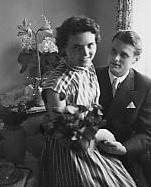 |
A typical engagement in 1954: Humble and very decent |
|
1936
|
Konrad Zuse builds his first computer
I. G. Farben produces contact lenses of perspex.
Some people can watch the Olympic Games in Berlin on TV.
|
|
1937
|
C. Carlson develops xerography.
G. Reber invents the radio telescope.
Dornberger is responsible for the development of the V-2 rocket.
First flight of the 'Fieseler Storch'
|
|
1938
|
L. Biro invents the ball pen.
Wernher von Braun produces a rocket which travels 18 km /11 mi.
Konrad Zuse constructs the Z1, a computer with binary coding.
Ferdinand Porsche presents the first Volkswagen beetle.
P. Schlack invents the synthetic fiber 'perlon'.
|
|
1939
|
W. C. Huebner invents a photo setter.
P. H. Mueller produces the first DDT.
|
|
1940
|
In the U. S. freeze drying is applied for the first time to preserverve food.
|
|
1941
|
Konrad Zuse develops the programmable computer 'Z2' for which he uses 3000 electromagnetic relays
A. Fleming, H. W. Florey and E. B. Chain discover penicillin and try it on human beings.
|
|
1942
|
W. von Braun develops the liquid-fuelled rocket-propelled bomb 'A 2' ('V 2').
Kodak produces infrared-sensitive films.
The first nuclear power plant is built.
|
|
1943
|
The Dutch physician W. J. Kolff invents the kidney dialysis machine.
J. Cousteau and E. Gagnan develop a device for scuba diving, the 'aqua lung'.
The British engineer A. Turing builds the 'Colossus', the first all-electronic calculator.
|
|
1944
|
The 'V 1', a flying bomb propelled by a jet engine and controlled by an autopilot is used against Great Britain.
The rocket-powered airplane 'Me 163 B' is launched for the first time.
|
|
1945
|
The first atomic bomb is dropped over Nagasaki and Hiroshima.
|
|
1946
|
The ENIAC, the first all-purpose, all-electronic computer, is developed by Eckert and Mauchly.
W. F. Libby discovers the radioactive carbon-14 method which helps to date artefacts in archeology.
|
|
1947
|
The rocket-powered airplane 'Bell XS-1' is the first to fly at supersonic speed.
The microwave cooker is introduced in America.
Goodyear invent the tubeless tyre.
P. M. Goldenmark invents the long-playing record.
|
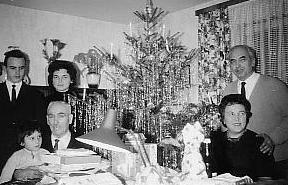 |
Christmas '64: Good things came only in very small packages. |
|
1948
|
G. Gabor invents holography.
J. Bardeen, W. Brattain, and W. Shockley build the first transistor.
G. de Mestral develops the velcro fastener.
Thanks to the polaroid camera developed by E. H. Land it doesn't take much patience now to check the quality of a photograph.
Norbert Wiener presents the new science of cybernetics.
|
|
1949
|
The BINAC (Binary Automatic Computer), the first electronic computer with a program storage is built in the U.S.A.
|
|
1950
|
The Diner's Club issues the first charge cards.
|
|
1951
|
Chrysler equip cars with power steering.
Erwin W. Mueller constructs a field ion microspcope.
J. Andre-Thomas and John Gibbon build a heart-lung machine.
|
|
1952
|
Sony produces the pocket-sized transistor radio.
P. M. Zoll uses the first cardiac pacemaker.
|
|
1953
|
Series production of the first supersonic jet ('F 100 Super Sabre').
Michelin and Pirelli apply radial-ply tyres.
Townes invents the maser, precursor of the laser.
|
|
1954
|
The 'Nautilus', the first atomic-powered submarine, is taken into operation.
The first nuclear reactor for the use in a power plant is built in Obminsk in the Soviet Union.
G. L. Pearson, C. S. Fuller, and D. M. Chaplin invent the solar cell.
F. Wankel constructs the first rotary-piston engine which is named after him.
|
|
1955
|
C. Cockerell builds a practical hovercraft.
N. S. Kapary manufactures the first optical fibres.
|
|
1956
|
Installation of the first transatlantic telephone cable.
R. Johnson builds the first computer hard disk for IBM.
John Backus and his team develop FORTRAN, the first computer programming language at IBM.
M. Sater and J. Mazzitello invent the video tape.
Ampex Corporation produce the first video recorder.
|
|
1957
|
The Soviet satellite Sputnik 1 is the first human-built rocket to travel around the earth, which produces a great shock in America.
In the same year the Soviets launch the first atomic-powered icebreaker.
|
|
1958
|
The stereo record is introduced.
|
|
1959
|
The programming language COBOL is developed.
Lunik is the name for a Soviet series of lunar orbiters which take photographs of the rear side of the moon.
|
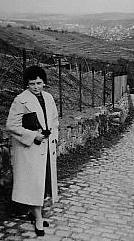 |
German 'Frauleins' spend a great part of their small income on clothes. So the Wirtschaftswunder is accompanied by the 'Frauleinwunder'. |
|
1960
|
T. H. Maimen constructs the first laser by applying a ruby cylinder.
'Echo 1', the first passive communications satellite, takes off.
J. Piccards 'Trieste' dives down to a depth of almost 1,100 m/3,608 ft.
|
|
1961
|
The Russian Jury A. Gagarin becomes the fist man in space.
First stereo broadcasting in the U.S.
|
|
1962
|
At General Motors the first industrial robots start work.
Nick Holonyak invents the LED.
|
|
1963
|
Philips starts selling audio tapes.
W. Bruch invents the color TV system PAL.
|
|
1964
|
First use of home kidney dialysis.
The first container ships are built.
|
|
1965
|
R. Moog builds the first synthesizer.
J. Giordmaine and R. Miller develop the programming language BASIC (beginner's all-purpose symbolic instruction code).
|
|
1966
|
A tidal power plant is put into operation in France.
'Luna 9' lands on the moon.
R. M. Dolby presents his method to eleminate background sound in recordings.
|
|
1967
|
G. Amdahl proposes to build a computer with parallel processors.
|
|
1968
|
The Soviet 'TU-144' is the first supersonic jet to transport passengers.
|
|
1969
|
N. Armstrong and E. Aldrin are the first human beings on the moon. Thanks to TV this can be witnessed by the whole world.
M. E. Hoff invents the microprocessor (chip).
The ARPAnet, precursor of the internet, is introduced.
|
|
1970
|
The floppy disk starts a new era of data storage.
AEG-Telefunken introduces the optical disc.
'Luna 16' collects stones on the moon and takes them to earth.
'Luna 17' takes 'Lunochod' to the moon and 'parks' it there.
B. Abbott develops the RAM for INTER.
The first 'jumbo jet' (Boeing 747) takes up regular service.
Philips introduces the home video recorder.
|
|
1971
|
Texas Instruments present the first pocket calculator ('Pocketronic').
The 'chip', the first microprocessor is introduced by Intel.
The Soviet platform 'Saljut 1' is working in space.
Niklaus Wirth works out the programming language PASCAL
|
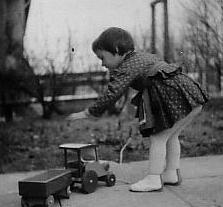 |
If you want a good relationship with the gods of technology: The early bird catches the worm. |
|
1972
|
A. M. Cormack and G. N. Hounsfield invent computer tomography.
|
|
1973
|
G. N. Hounsfield invents the scanner.
In the U.S.A. they develop GPS (Global Positioning System).
Skylab enables scientists to research in space.
|
|
1974
|
Hewlett Packard introduces a programmable pocket calculator.
|
|
1975
|
Clocks and pocket calculators are equipped with LCD (Liquid Crystal Display).
Computer-coded labels are used in supermarkets.
|
|
1976
|
IBM introduces the ink-jet printer.
First passenger flight of the French supersonic jet 'Concorde'.
|
|
1977
|
'Voyager 1' and 'Voyager 2' are launched.
The Californian telephone system uses fibre optics.
The PC 'Apple II' conquers the market with its user-friendlyness.
|
|
1978
|
Apple PCs are equipped with floppy disk drives.
|
|
1979
|
Sony presents the 'Walkman'.
The world is shocked by a reactor accident on auf Three Miles Island (USA).
|
|
1980
|
Uwe Fink discovers a thin atmosphere on Pluto.
Introduction of the video camera
|
|
1981
|
First flight of the Space Transportation System 'Columbia'.
'Solar One', a large solar-power station is taken into operation.
DOS (Disk Operating System) is introduced by IBM.
|
|
1982
|
Introduction of the CD (Compact Disc) player
Bosch present ABS (Anti-lock Braking System) for cars.
|
|
1983
|
A German-American team of scientists invents the 'wet' solar cell.
IBM introduces the PC-XT, the first personal computer with a hard-disk drive.
Apple equips PCs with a mouse and a pull-down menu.
|
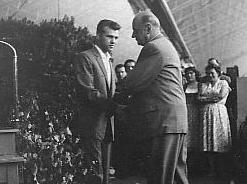 |
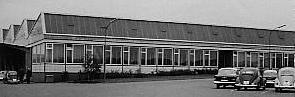
The beginning of the fifties was dominated by work: Though it may be true that all that glitters is not gold, it is for certain also true that a golden key can open any door. |
|
1984
|
IBM presents a megabit RAM memory chip.
The Deutsche Bundespost (German Federal Postal services) introduces Btx, an early precursor of the internet.
|
|
1985
|
AT&T Bell Laboratories reaches a new record: they manage to send the equivalent of 300.000 telephone conversations at once via a single optical fibre.
|
|
1986
|
Compac beats IBM when presenting an advanced 32-bit chip, the Intel 80386.
The Soviet space station 'Mir' is launched.
The catastrophy of Chernobyl, a terrible accident in a nuclear power plant, kills many people.
|
|
1987
|
The Japanese digitize the 'genetic finger print': Digital Audio Tape (DAT)
|
|
1988
|
'Ariane 4' is launched.
The ICE (InterCity Express train) achieves a new speed record at 406.9 km/h/ 252.8 mi/h.
Start of ISDN
The Transrapid leaps the ICE on a test track by reaching 412.6 km/h/ 256.4mi/h.
|
|
1989
|
Particle accelerator LEP is discovered at CERN.
The cordless telephone is introduced.
Digital Satellite Radio (DSR) begins to broadcast.
|
|
1990
|
The German satellite ROSAT is launched.
|
|
1991
|
In Germany the first micromotor is presented.
The CD-ROM is introduced.
Digital cordless telephones are sold in Germany.
|
|
1992
|
Mobile radio transmission is introduced in Germany with networks D 1 and D 2.
|
|
1993
|
Display camcorders are now available in the shops.
|
|
1994
|
The Channel tunnel between England and France is inaugurated.
Audi builds cars with an aluminium body.
In the USA the first genetically manipulated vegetables are sowed.
Siemens builds the first European eurocomputer 'Synapse-1'.
|
|
1995
|
ARD and ZDF, the two great German broadcasting stations, transmit a programme from a virtual studio.
Introduction of a traffic guidance system for cars.
First docking of the American 'Space Shuttle' at the Russian station 'Mir' is successful.
The 'Pont de Normandie', a large bridge over the Seine, is inaugurated.
|
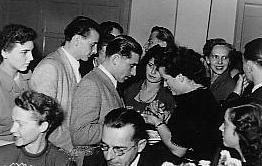 |
1951: A firm's party. You get what you work for. |
|
1996
|
Introduction of the Digital Video Disc (DVD) with a storage capacity of 17 GB
The first hydrogen-powered cars are built in Germany.
|
|